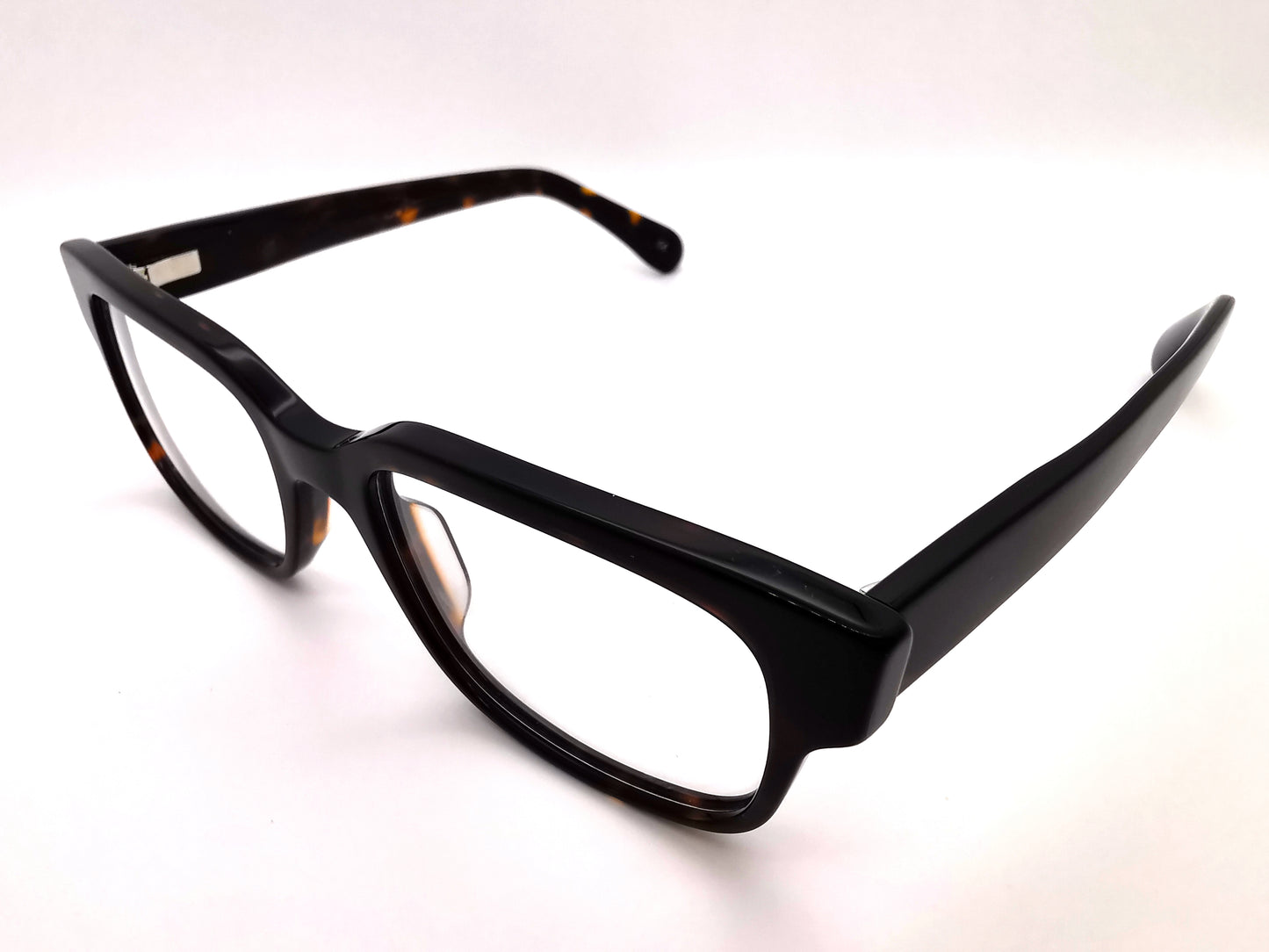
Plastic P01
Plastic P01
size
Couldn't load pickup availability
Materials and care
Materials and care
How to Read Your Glasses Prescription
How to Read Your Glasses Prescription
Understanding your eyeglass prescription can be confusing if you're not familiar with the numbers and abbreviations. This guide explains the key terms so you can read your prescription and choose the best glasses for your needs.
1. What Do the Abbreviations Mean?
Your prescription includes specific terms that describe how your vision needs to be corrected:
OD (Oculus Dexter):** Right eye
OS (Oculus Sinister):** Left eye
OU (Oculus Uterque):** Both eyes
SPH (Sphere):** The strength of your lens needed to correct nearsightedness or farsightedness (+ for farsightedness, - for nearsightedness)
CYL (Cylinder):** The correction needed for astigmatism
AXIS:** The orientation of astigmatism correction, measured in degrees from 0 to 180°
ADD:** Additional magnifying power for reading or bifocals (common for presbyopia)
PD (Pupillary Distance):** The distance between your pupils, important for aligning your lenses properly
2. Common Prescription Types
Single Vision:**Corrects one type of vision problem (nearsightedness, farsightedness, or astigmatism)
Bifocals/ Multifocal: **Correct multiple distances—far and near. Progressives provide seamless transition between distances and may include an ADD power for reading.
3. Why Understanding Your Prescription Matters
Choosing the Right Lenses:** Knowing your SPH, CYL, and ADD helps you select the correct lens type—single vision, bifocals, or progressives.
Buying Online:** You’ll often need to input your prescription details manually.
Pupillary Distance (PD):** Essential for proper lens alignment. Sometimes it's not listed on your prescription, so you may need to measure it yourself.
4. Can You Use Your Eyeglass Prescription for Contact Lenses?
No. Contact lens prescriptions include additional details like base curve (BC) and diameter (DIA), which are not part of your eyeglass prescription. Always get a separate contact lens exam and prescription.
Conclusion
Knowing how to read your eyeglass prescription helps you make informed choices when buying glasses—whether in-store or online. Understanding terms like OD, OS, SPH, and CYL ensures you get the right fit for clear and comfortable vision.
Share